When embarking on the journey of building a swimming pool, one of the most critical aspects to consider is your local climate. The environment in which you live plays a significant role in determining not only the design and functionality of your pool but also the materials you choose for its construction. Understanding local climate factors can help you make informed decisions that will enhance the longevity and enjoyment of your pool.
Whether you reside in a region characterized by scorching summers, frigid winters, or coastal breezes, each climate presents unique challenges and opportunities that can influence your pool’s performance and maintenance. As you delve into the specifics of your local climate, you will find that factors such as temperature, humidity, and precipitation patterns can significantly affect the materials you select for your pool. For instance, certain materials may be more suitable for areas with high humidity, while others may be better suited for dry climates.
By taking the time to assess these local climate factors, you can ensure that your pool not only meets your aesthetic preferences but also stands the test of time against the elements.
Key Takeaways
- Local climate factors play a crucial role in determining the right pool construction materials.
- Choosing the right pool construction materials is important for the longevity and maintenance of the pool.
- Temperature and humidity can have a significant impact on the durability of pool materials.
- Hot and dry climates require pool construction materials that can withstand high temperatures and low humidity.
- Cold and freezing climates require pool construction materials that are resistant to freezing and thawing cycles.
Importance of Choosing the Right Pool Construction Materials
Selecting the right materials for your pool is paramount to its overall success and durability. The materials you choose will not only impact the aesthetic appeal of your pool but also its maintenance requirements and lifespan. For example, some materials are more resistant to fading, cracking, or corrosion than others, making them better suited for specific climates.
By understanding the properties of various materials, you can make choices that align with both your budget and your long-term vision for your pool. Moreover, the right materials can enhance the safety and comfort of your swimming experience. For instance, certain finishes may provide better traction, reducing the risk of slips and falls, while others may retain heat more effectively, allowing for a more comfortable swimming experience during cooler months.
By prioritizing material selection, you can create a pool that not only looks stunning but also functions optimally in your specific climate conditions.
Understanding the Impact of Temperature and Humidity on Pool Materials
Temperature and humidity are two critical factors that can significantly influence the performance of pool construction materials. In regions with high temperatures, materials that can withstand intense heat without warping or degrading are essential. For example, concrete and certain types of stone are often favored in hot climates due to their durability and ability to retain coolness underfoot.
Conversely, in areas with high humidity, materials that resist mold and mildew growth become crucial. Choosing non-porous materials can help mitigate these issues, ensuring that your pool remains clean and inviting. Additionally, temperature fluctuations can lead to expansion and contraction in various materials.
This is particularly relevant for metals and certain types of plastics, which may become brittle or lose their structural integrity over time if not properly selected. Understanding how temperature and humidity interact with different materials will empower you to make choices that enhance the longevity and functionality of your pool.
Considerations for Pool Construction Materials in Hot and Dry Climates
If you live in a hot and dry climate, there are specific considerations to keep in mind when selecting pool construction materials. One of the primary concerns is heat retention; materials that absorb heat can make your pool uncomfortable during peak summer months. To combat this, consider using lighter-colored finishes or reflective surfaces that help keep the water temperature down while providing a visually appealing aesthetic.
Moreover, water evaporation is a significant issue in arid climates. Choosing materials that minimize evaporation can help conserve water and reduce maintenance costs. For instance, opting for a pool cover made from durable materials can significantly reduce water loss due to evaporation.
Additionally, incorporating landscaping elements such as trees or shrubs around your pool can provide shade and further mitigate heat exposure.
Considerations for Pool Construction Materials in Cold and Freezing Climates
In contrast to hot and dry climates, cold and freezing environments present their own set of challenges when it comes to pool construction materials. One of the most pressing concerns is frost damage; materials that are not designed to withstand freezing temperatures may crack or deteriorate over time. Therefore, it is essential to select materials specifically engineered for cold climates, such as frost-resistant concrete or specialized tiles.
Another consideration is insulation. In colder regions, ensuring that your pool retains heat is crucial for maintaining a comfortable swimming environment year-round. Insulated walls or covers can help minimize heat loss during colder months, making your pool more enjoyable even when temperatures drop.
Additionally, incorporating heating systems designed for cold climates can enhance your swimming experience while ensuring that your investment remains protected against harsh weather conditions.
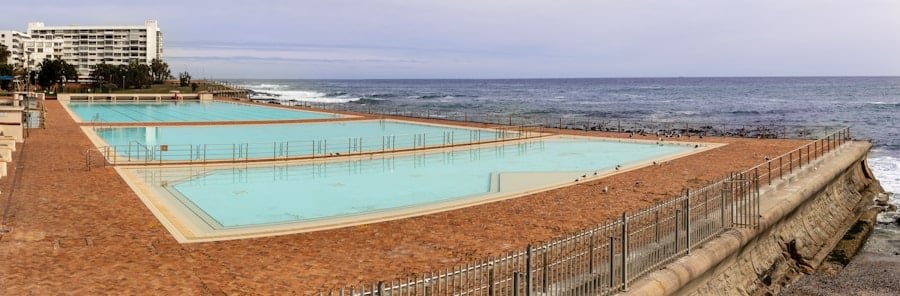
Factors to Consider for Pool Construction Materials in Coastal and Saltwater Environments
Choosing the Right Materials
Stainless steel fixtures or marine-grade materials are excellent options for ensuring durability in coastal environments. These materials are specifically designed to withstand salt exposure and can help extend the lifespan of your pool.
Designing for Coastal Conditions
It’s not just the materials that need to be considered, but also the design of your pool area. Coastal winds and storms can cause significant damage to your pool if it’s not designed with these conditions in mind. Wind-resistant designs and materials can help protect your investment from potential damage caused by harsh weather conditions.
Enhancing Resilience
In addition to choosing the right materials and designing for coastal conditions, there are other features you can incorporate to enhance the overall resilience of your pool area. Windbreaks or strategically placed landscaping can help protect your pool from coastal elements and create a more enjoyable and safe swimming experience.
The Role of Wind and Rain in Selecting Pool Construction Materials
Wind and rain are two environmental factors that should not be overlooked when selecting pool construction materials. In areas prone to high winds, it is essential to choose materials that can withstand gusts without compromising structural integrity. For instance, opting for heavier materials or securing lightweight structures can help prevent damage during storms.
Rainfall also plays a significant role in material selection. In regions with heavy rainfall, drainage becomes a critical consideration. Choosing permeable materials or incorporating proper drainage systems can help prevent water accumulation around your pool area, reducing the risk of erosion or flooding.
Additionally, selecting finishes that are resistant to water damage will ensure that your pool remains safe and visually appealing even during rainy seasons.
Finding the Right Pool Construction Materials for Your Local Climate
In conclusion, selecting the right pool construction materials is a multifaceted decision influenced by various local climate factors. By understanding how temperature, humidity, wind, rain, and other environmental elements interact with different materials, you can make informed choices that enhance both the functionality and aesthetics of your pool. Whether you live in a hot and dry region or a cold coastal area, prioritizing material selection will ensure that your investment stands the test of time while providing a safe and enjoyable swimming experience.
Ultimately, taking the time to assess your local climate will pay off in dividends as you enjoy countless hours of relaxation and recreation in your beautifully constructed pool. By choosing wisely based on environmental considerations, you will create an oasis that not only complements your lifestyle but also harmonizes with the natural elements surrounding it.
FAQs
What are local climate factors?
Local climate factors refer to the specific weather conditions and environmental characteristics of a particular region, including temperature, humidity, precipitation, and exposure to sunlight and wind.
How do local climate factors influence the selection of pool construction materials?
Local climate factors can influence the selection of pool construction materials in several ways. For example, in regions with high levels of sunlight and heat, materials that are resistant to UV damage and heat retention may be preferred. In areas with frequent freeze-thaw cycles, materials that can withstand temperature fluctuations and potential frost damage may be necessary.
What are some examples of pool construction materials that are influenced by local climate factors?
Examples of pool construction materials that may be influenced by local climate factors include fiberglass, concrete, vinyl, and tile. In hot and sunny climates, materials with UV-resistant properties, such as fiberglass, may be preferred. In colder climates, materials that can withstand freeze-thaw cycles, such as concrete and tile, may be more suitable.
How can pool owners determine the best construction materials for their local climate?
Pool owners can determine the best construction materials for their local climate by consulting with pool construction professionals who are familiar with the specific environmental conditions of the region. Additionally, conducting research on the performance of different materials in similar climates and considering factors such as maintenance requirements and longevity can help in making an informed decision.